
Summary of feedback and submissions for the Social Worker Strategy and Action Plan
Who we heard from
The SWRB ran a workshop at the Te Pai Ora o Aotearoa | Social Service Providers Aotearoa (SSPA) Whakamanawa Conference, 10-11 September 2025 in Rotorua.
The workshop had 60 attendees. There were several practising social workers, and most attendees were employers of social workers in the social services sector. We started the workshop with an overview of the social work workforce strategy and then broke up into smaller groups. For each theme—attract, recruit, and retain— participants were invited to share insights on what’s working, what’s hard, ideas for improvement, and who could drive change.
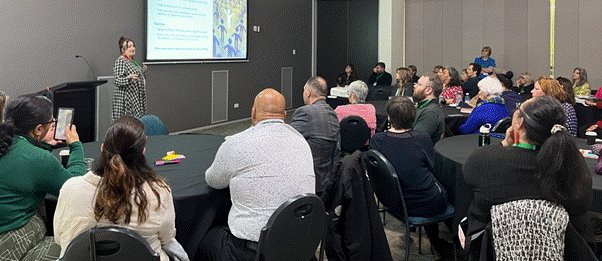
Whakamanawa Conference 2025, workforce strategy workshop.
What we heard in summary
- Financial Barriers: Costs of study, registration, and unpaid placements are major obstacles.
- Workforce Pathways: There’s a strong call for more flexible, alternative, and supported pathways into and through the profession.
- Recognition and Status: Improving public perception, recognising the complexity and value of social work, and promoting the profession are recurring priorities.
- Collaboration: Success depends on partnership between government, NGOs, educators, iwi, and professional bodies.
- Support and Wellbeing: Addressing burnout, workload, and providing better support and supervision are critical for retention.
What we heard for each key area of focus for the Strategy – Attraction & Recruitment, and Retention
1. ATTRACTION: Making social work an appealing and inclusive profession
What’s Working
- “Employers paying SWRB Registration fees”
- “Diversity of social workers”
What’s Hard
- “Costs of study”
- “Costs of registration”
- “Length of programmes”
- “Placements requirements are too much/ last year of study too hard”
- “Can’t do Placement in place of work – kaimahi have to give up roles to study”
- “Unpaid placement – financial burden”
- “Supporting students and new starters adds workload burden to overstretched staff”
- “Ongoing salary disparity”
- “Negative public perception”
Suggestions
- “Promote the profession – status recognition”
- “Start early in schools”
- “Work with iwi to promote – tell our story good & bad realities”
- “Bring back study awards/ subsidise study”
- “Paid placements”
- “Create easier flexible pathways for those with similar degrees to learn & qualify while in work”
- “Set up social work exchanges between Community NGOs to exchange skills and experience”
- “Better wages”
Who did attendees suggest could ‘Make It Happen”
- “Individual agencies as a requirement”
- “Govt. could wipe fees for last year of study for those entering the workforce/ profession”
- “NGO– Govt– Educators to work together”
- “SWRB create easier guidelines and social workers within organisations to guide this”
2. RECRUITMENT: Developing clear pathways into the profession
What’s Working
- “Registration of social work as a regulated profession”
- “Pay equity”
What’s Hard
- “Public perception of social work”
- “Political climate of uncertainty of jobs and funding”
- “Commitment to study vs work”
- “Work/ life balance”
- “Financial costs of study”
- “Managers / employers managing social workers with different lens and priorities”
- “Registration process takes too long and too expensive”
- “Lack of support for those who provide supervision, training or support to students and new starters”
Good Ideas
- “Fund the work properly and recognise complexity”
- “Provide resources”
- “Address unresolved pay equity settlements”
- “Financial support for students – scholarships /paid placements”
- “Provide training incentives”
- “Use the voices of the profession social workers and students to promote the profession – promotional clips”
- “Grow data and evidence”
- “Move forward with a collaborative voice of the profession”
Who did attendees suggest could make it happen
- “SWRB– ANZASW partnership”
- “Whanaungatanga – manaakitanga – rangitiratanga”
3. RETENTION: Keeping social workers in the sector
What’s Working
- “Training within our organisation to support staff with the registration process”
What’s Hard
- “Stigma of social work”
- “Work– life balance”
- “Caseload complexity, burn out and fatigue”
- “Additional pressures on staff to support learners”
- “Registration process slow and clunky and too expensive – costs are a barrier”
- “Length of academic training programmes – 4-year degree too long”
- “Contracts changed to no longer require roles to be filled by registered social workers”
Suggestions
- “Lower SWRB fees”
- “SWRB to run professional development workshops on CPD relevant to industry post registration – ongoing CPD on core competencies and Code of Conduct”
- “Salary increments for gaining micro-credentials”
- “Improve work–life balance – flexibility around family commitments”
- “Better support social workers in the workplace”
- “More opportunities to engage with trained professional supervisors – currently too expensive and out of reach of community providers”
- “Explore sub-degree social work roles – Certificate / Diploma level”
- “Create career pathways for the unregistered social sector workforce and value, legitimise their contribution”
- “Create alternative pathways to training – e.g. apprenticeship models and mentoring”
- “Draw insights from overseas re: pay, education, roles and scopes, particularly Australia”
- “Start telling the narrative – what is our social work kōrero”
- “Understand the data better – research where people go when they leave the profession”
Who did attendees suggest could make it happen
- “SWRB in partnership”
- “Iwi/ Wānanga”
