
- He panui anō – Annual practising certificate renewal
- He Pito Mata – Future practitioners at Whitireia
- He kāhui whetū – Jan-Marie Dephoff
- Te whakanui i te tau – Celebrating 50 years
- Pānui tonu – Continuing professional development
- Kimihia – Are they registered? What you need to know
- Te karere a te Tumu Herenga Waka – Message from our Chief Executive
He panui anō – Annual practising certificate renewal
Tēnā koe to the more than 6,000 social workers who’ve already renewed their 2026/27 practising certificate, submitted their declaration, and completed the workforce survey. Mahi tika ana, great work.
If you haven’t renewed yet, or need to make a non-practising declaration, now’s the time to do it by logging into MySWRB. Your 2025/26 PC expires on 30 June, so make sure you get this sorted before then.
Completing the workforce survey matters almost as much as the renewal process. It’s our clearest picture of who’s in the profession, where, and doing what, and it directly shapes the workforce planning advice we give government.
We receive a lot of phone calls during the PC renewal period. If you need to contact us, try emailing applications@swrb.govt.nz. We’ll get back to you as soon as we can. You can also look over the PC renewal FAQs
Having trouble logging in? You can reset your password from the MySWRB login page. If you’ve tried doing so and haven’t received a reset password email, you may have registered with a different email address. If you no longer have access to that email address, contact us.
He Pito Mata – Future practitioners at Whitireia
We visited the Whitireia social work programme and had the pleasure of meeting 16 impressive fourth-year ākonga. We shared an overview of the SWRB’s purpose and functions, then looked at one of the topics students are most interested in: registration and what it takes to become registered.
The group brought thoughtful and challenging questions about registration, as well as some insightful questions for Dr Andrew Thompson RSW – our Senior Advisor Social Work – about practising social work within a Crown entity.
Their warm welcome, sharp critical thinking, and open kōrero left us feeling energised and optimistic about this outstanding group of future social work practitioners.
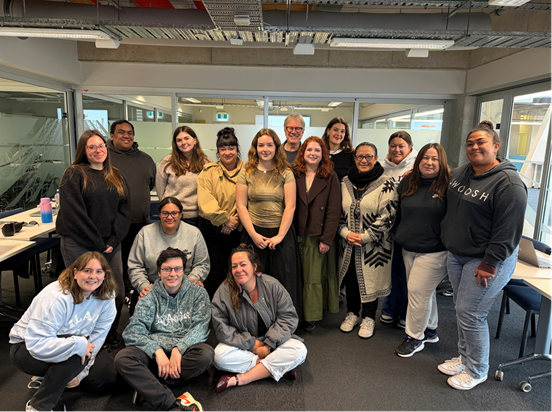
Whitireia, Year 4, Bachelor of Social Work ākonga: Sian, Alison, Joseph, Dylan-James, Kay, Amy, Riki-Lee, Kendra, Nga Powhiri, Marslei, Taressa and Cholletta.
Middle centre: SWRB staff: Bridie Bagnall, Dr Andrew Thompson RSW, and Krystiarna Jarnet-Phillips. Whitireia social work lecturer: Dominika Zmuda RSW.
He kāhui whetū – Jan-Marie Dephoff
Jan-Marie Dephoff, a recent social work graduate, shares her lived experience of strength and resilience in the face of addiction and an abusive relationship that inspired her to become a social worker after a social worker recognised her potential at a critical point in her life. Despite significant financial and personal challenges, including raising four children alone while studying, Jan completed her qualification and now brings both professional skill and lived experience to her work in mental health and addictions.
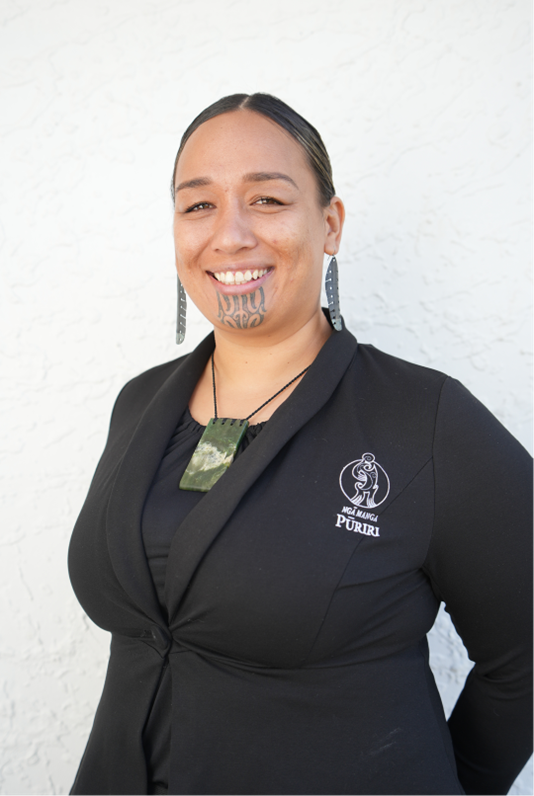
Jan sees her lived experience as a strength, supported by reflection, supervision, and team support, and grounds her practice in a kaupapa Māori, strengths-based framework that centres whānau capability, connection, and self-determination. At its heart, her story reflects the transformative power of being seen, supported, and encouraged to uncover the “gold” in herself and others.
Read the full interview with Jan-Marie Dephoff
Te whakanui i te tau – Celebrating 50 years
Massey University’s School of Social Work is marking a significant milestone in 2026: 50 years of the Bachelor of Social Work.
Since its establishment in 1976, the programme has helped shape generations of social workers across Aotearoa New Zealand. Grounded in care, connection, advocacy and community, it has made a lasting contribution to the profession and to the many people and communities its graduates go on to serve.
The School of Social Work continues to play a leading role in the sector, with a strong legacy of social work education and a clear commitment to preparing graduates for practice in contemporary Aotearoa.
The anniversary has been marked through a series of events, webinars and celebrations that reflect on the School’s history while recognising its ongoing contribution to social work education, research and practice.

Photo credit: Massey University
Pānui tonu – Continuing professional development
As we come to the end of the 2025/26 practising year and turn to the 2026/27 renewal round now’s a good time to think about your past year’s CPD. When you submit your PC declaration you’ll confirm that you’ve completed at least 20 hours of continuing professional development (CPD), including CPD focused on working with Māori.
Have you thought about uploading your CPD to MySWRB? To help you give it a go, we’ve got an easy video walking you through the steps.
CPD can be all sorts of things — postgraduate study, webinars, acting-up positions, reading practice-focused books and articles, social work kōrero, and much more. You don’t need to provide evidence for the CPD you log, so it’s a quick job. Click here to find out more.
Social work is an evolving practice. Growth and development are central to our mahi. Learning new skills and techniques builds our ability to engage with the ever-changing landscape of our society. Now is a great time to think about the areas you want to develop, and this will help you develop a CPD plan to meet your practice obligations.
We know that social workers are hardworking busy kaimahi. Take some time before making your PC application and look back over the year and have a go at uploading your CPD to your MySWRB. It’s super easy! If you have any pātai please email cpd@swrb.govt.nz.
Ngā mihi mahana
Emily Ranginui
Kimihia – Are they registered? What you need to know
In New Zealand, only a person registered with the SWRB and holding a current practising certificate can hold themselves out as a social worker. It’s set in law under the Social Workers Registration Act 2003, and it’s how the public can trust that social workers are safe, qualified, and accountable. We keep a public register.
• Check the SWRB public register.
• Report unregistered practice at aretheyregistered@swrb.govt.nz — include the person’s name (if known), the work they’re doing, and why you think they may be practising without registration.
• Concerns about registered social workers should be raised through the SWRB complaints/professional standards process, click here for more information.
We’re running a Zoom drop-in session this Thursday 18 June 1–2pm if you’d like support using the system or have any questions.
When the title is used by those who’ve earned it, everyone in the profession benefits, along with those we serve. Thank you for doing your part.
Te karere a te Tumu Herenga Waka – Message from our Chief Executive
Tēnā tātou katoa.
The practising certificate renewal period is well underway with almost 6,000 completed. The registration team is working hard to process applications and respond to queries promptly. Ngā mihi maioha to everyone who has renewed their practising certificate and completed the workforce survey. If you have not yet completed the survey, we encourage you to please log back in to do so. Kōrero mai.
While the renewal period is keeping us busy behind the scenes, some of the registration team have also been out on the road including a visit to Whiteria to meet graduating students and talk about what registration means in practice. It’s a conversation we enjoy having. Registration is not just an administrative step – it’s the point at which someone formally joins a regulated profession, with all the accountability and identity that carries.
That connection between education and registration is something we are thinking about carefully at the moment. There is a wider conversation underway in the sector about social work education. In the months ahead we’ll be sharing more about how we see our role – as regulator, as the lead agency for workforce planning, and as part of a system that no single organisation holds alone.
For now, if you have not yet renewed your practising certificate, or to complete the workforce survey, the closing date is 30 June. Don’t leave it too late, e hoa mā.
Ngā manaakitanga,
Sarah Clark
